NEWS

How Spray Drying Shapes the Flavor of Instant Coffee Powder

Instant coffee is one of the world's most traded food commodities, and behind every cup lies a process that decides whether the flavor sings or falls flat: spray drying.The flavor challengeCoffee contains hundreds of volatile aromatic compounds that are easily damaged by heat, oxygen, and moisture. The key challenge for any instant coffee manufacturer is to remove water from liquid coffee extract while preserving as much of the original flavor profile as possible. Spray drying does this by design — it converts liquid coffee concentrate into a dry, shelf-stable powder in seconds, minimizing the duration of heat exposure.How spray drying works for coffeeIn a spray-drying tower, liquid coffee concentrate is atomized into a mist of fine droplets that make contact with a controlled stream of hot air. The massive surface area of the droplets enables moisture to evaporate almost instantly, while the core temperature of each particle stays well below the air temperature due to evaporative cooling. This is the magic — the powder does not "cook" the way it would in a slower drying method, so fragile coffee aromas survive.A useful analogy: spray drying is a flash of heat, not a slow roast. That distinction matters for flavor.What influences the final tasteSeveral process variables directly affect the sensory quality of instant coffee powder:- Feed concentration and solids content — too thin means longer drying, too thick affects solubility- Inlet and outlet air temperatures — must be balanced to protect volatiles while achieving target moisture- Atomizer type and speed — determines particle size distribution, which influences dissolution behavior and mouthfeel- Post-drying handling — cooling, agglomeration (if required), and packaging with inert gas flushing or vacuum sealing to prevent oxidationNone of these are one-size-fits-all. A serious manufacturer adjusts parameters to match the coffee variety and the customer's desired cup profile.Why it matters to buyersFor importers and brand owners, the spray-drying capability of your supplier is not just a technical detail — it is the difference between coffee that tastes like coffee and coffee that tastes like burnt cardboard. When evaluating suppliers, ask about their process control, how they handle flavor-sensitive raw materials, and whether they can share samples that match what you would receive at scale.At HENG GOODWILL FOOD, spray drying is our core competency, backed by ISO 22000, HACCP, and HALAL certifications. If you are sourcing instant coffee powder, we welcome your questions about process and samples.Wetsite: www.hengfoood.com
2026-08-12
View details

Non-Dairy Creamer Beyond the Cup: Baking, Breakfast and Savory Applications

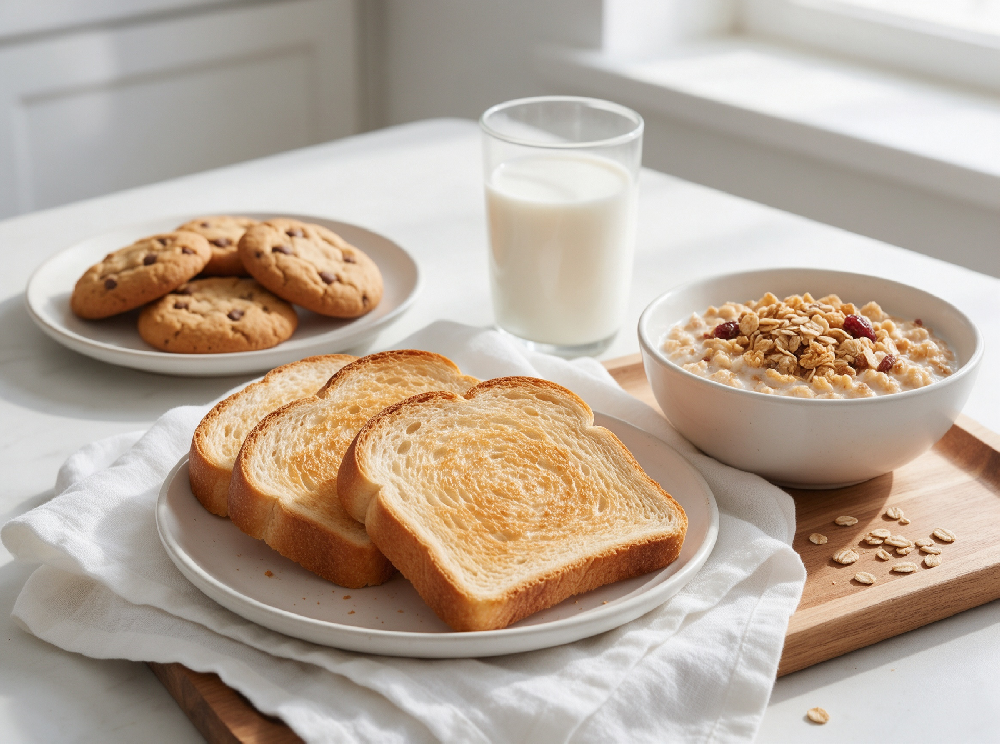
Most buyers first meet non-dairy creamer in coffee and tea — and stop there. That is a missed opportunity. A creamer is essentially an emulsified vegetable-fat powder: dairy-free, ambient-stable, and easy to dose. Those same properties make it a versatile building block across baking, breakfast foods, and even savory products where formulators want creaminess without the complications of fresh dairy.Baking and confectioneryIn breads, cakes, and biscuits, creamer contributes a soft, rich crumb and a gentle milky note while remaining easier to store and handle than fresh milk or butter. Because it is a dry ingredient, it blends directly into premixes and dough systems, which suits bakeries that standardize recipes across multiple outlets. Fat content and melting behavior should be chosen to fit the specific application — from lean bread doughs to rich cookie formulas.Breakfast and instant foodsInstant cereal porridge, oatmeal, and breakfast mixes are natural fits. Creamer improves rehydration speed and delivers the creamy mouthfeel consumers expect from a "milk-added" bowl — without requiring the end user to add fresh milk. For manufacturers, it also simplifies the dry-mix formulation: one powder that carries both the fat system and the whitening effect.Soups, sauces, and savory Cream-style soups, sauce bases, curry pastes, and gravies rely on fat and emulsion stability for body and smoothness. A creamer designed for these systems can round out sharp spice notes and give a velvety finish, while its plant-based profile suits halal, vegetarian, and cost-sensitive lines. Acid and heat tolerance matter here, so the specification should be validated against the actual cooking process.Why formulators are taking another lookRenewed interest comes partly from economics. Dairy price swings and supply fluctuations have pushed formulators to re-examine every dairy-derived component in their recipes, and a creamer offers a plant-based, price-stable alternative that can be sourced steadily and stored without refrigeration. Tightening consumer expectations around halal, vegetarian, and clean-label claims make that argument relevant well beyond the beverage aisle.What to specify with your supplierApplication decides the specification. Clarify the intended use, and let the supplier guide you on fat level, solubility, and stability requirements; confirm performance with samples under your own process conditions. Always treat the final specification sheet as the reference for any parameter.Non-dairy creamer is not a one-purpose product. Jiangsu Leiva Biotech Co., Ltd specializes in non-dairy creamer, whipping cream powder, and instant coffee powder, and we can recommend a grade matched to your application — from beverages to baking to savory systems — with samples for evaluation.website: www.hengfood.com
2026-09-10
View details

Consistency Wins: Why Café and Milk Tea Chains Standardize on Powdered Ingredients

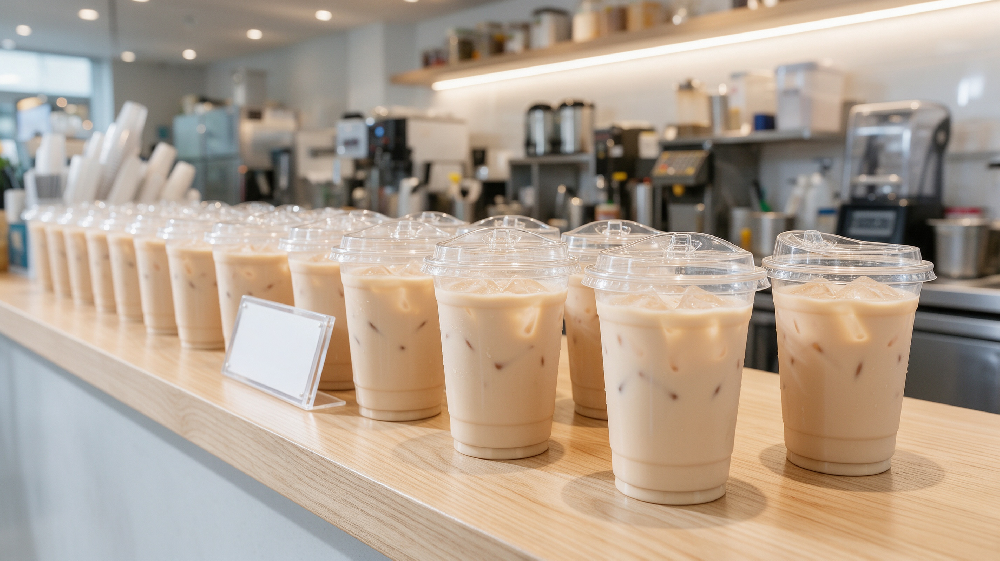
Across Southeast Asia, the Middle East, and other emerging markets, café and milk tea chains are opening new outlets at remarkable speed. What decides whether that expansion succeeds is rarely the signature recipe itself — it is the ability to serve the same cup, day after day, in store number one and store number one thousand.The scaling challenge A handcrafted drink built on fresh milk depends on variables that multiply with every new city: the skill of each barista, the quality of local dairy supply, the reliability of cold chains, and seasonal changes in raw ingredients. For a regional chain growing across borders, chasing identical quality through those variables alone is expensive and fragile.Why powdered ingredients helpSpray-dried powders — non-dairy creamer, instant coffee powder, whipping cream powder — offer chain operators a practical answer. First, batch-to-batch consistency: a factory-produced powder delivers the same flavor and texture profile in every shipment, giving the central kitchen one fixed starting point. Second, simple logistics: powders store at ambient temperature with a long shelf life, cutting cold-chain costs and waste in tropical markets. Third, ease of operation: any outlet staff can reproduce the same drink by following the same mixing steps, reducing dependence on individual skill.Managing the trade-offSome brands worry that "powdered" sounds less premium than fresh dairy. In practice, modern emulsion systems reproduce the creamy mouthfeel and stability that a drink needs, and many successful chains deliberately combine fresh milk with a powdered creamer — keeping the fresh note on display while using powder as the consistent base that protects margins and quality across hundreds of outlets.A trend with staying powerThis is still an early chapter. From Jakarta to Dubai, the number of branded outlets keeps climbing, and with every new store a chain opens, the pressure to protect a consistent customer experience grows. Ingredients that can be centralized, measured, and repeated — while still tasting fresh to the consumer — will keep winning space in chain supply contracts. For ingredient suppliers, the opportunity is to be the reliable partner behind that growth, offering not just powder but predictability.What to look for in a partnerWhen building a standardized system, formulation support matters as much as the ingredient itself: can the supplier tailor milkiness, sweetness, and solubility to your target market, test samples against your actual recipe, and scale from pilot batches to full container volumes? A supplier who thinks in systems, not just in tons, becomes a real advantage for a growing chain.At Jiangsu Leiva Biotech Co., Ltd, we produce non-dairy creamer, whipping cream powder, and instant coffee powder at our own spray-drying facility. Whether you need a single standardized ingredient or a complete base for your beverage line, we can recommend a solution matched to your outlets and provide samples for evaluation.website: www.hengfood.com
2026-09-08
View details

Creamy Without the Dairy: Non-Dairy Creamer in Ice Cream and Frozen Desserts

Ask most people where non-dairy creamer is used, and they will say milk tea and coffee. But one of its most valuable applications is often overlooked: ice cream and frozen desserts. In many markets across Asia, the Middle East, and Africa, creamer has been a practical ingredient in frozen treats for decades — and with the global shift toward plant-based eating, its role is only growing.What creamer brings to ice creamIce cream is essentially a frozen emulsion of fat, water, sugar, and air, and the fat system does much of the work in delivering creaminess and body. Non-dairy creamer contributes a stable, plant-based fat source that helps create a smooth, full mouthfeel and an even texture. Because it is spray-dried into a powder, it blends easily into dry mixes, stores at ambient temperature, and removes the cold-chain pressure that comes with handling liquid dairy at the ingredient stage.Beyond plain ice creamThe same logic extends across the frozen and chilled dessert range: soft-serve mixes, ice lollies, mousse bases, pudding mixes, and frozen yogurt formulas can all be built on a creamer system. For manufacturers, the practical appeal is flexibility — one powder ingredient can support several product lines, and adjustments can be made simply by changing the blend ratio in the recipe.Plant-based and market-fit advantagesBecause creamer is non-dairy, it naturally fits plant-based product claims, which are expanding far beyond Western markets into Southeast Asia, the Middle East, and Latin America. It also suits markets where milk powder is expensive, imported, or subject to dairy regulations. For Muslim-majority markets, choosing a supplier with HALAL-compliant production is a practical step that avoids reformulation later. Specific fat content, melting behavior, and freeze-thaw stability should always be confirmed against the actual specification sheet and validated in your own recipe trials.What to discuss with your supplierWhen sourcing creamer for frozen desserts, talk about the end product first: a formula for premium ice cream may behave differently from one for water-based lollies or mousse. Ask for samples tested under real production conditions, confirm the fat system used, and check how the powder performs in cold mixing and freeze cycles before scaling up.At Jiangsu Leiva Biotech, we produce non-dairy creamer and other spray-dried powders in our own facility, and we can recommend a creamer specification for your ice cream or dessert application. Contact us for samples and application support.website: www.hengfood.com
2026-09-04
View details

Coffee Culture Goes Global: How Emerging Markets Are Driving Instant Coffee Demand

For decades, coffee consumption was concentrated in the West and a handful of producing countries. That picture is changing fast. Across Asia, the Middle East, Africa, and Latin America, a new coffee culture is taking shape: younger consumers, urban lifestyles, and affordable entry points are turning coffee from a niche habit into an everyday ritual. For ingredient suppliers, this shift is one of the most significant demand drivers in the beverage industry.Why instant coffee is the gatewayIn markets where fresh-brewed coffee remains relatively expensive and brewing equipment is scarce, instant coffee is the natural entry point. It needs no machine, no brewing skill, and no cold chain; it offers long shelf life and simple logistics. The 3-in-1 and 2-in-1 formats are especially popular across Southeast Asia and the Middle East, where consumers grew up with a milky, sweet coffee profile rather than the black, bitter style favored in traditional Western coffee culture.What this means for manufacturersGrowing demand does not automatically translate into easy business. Brands entering these markets face real challenges: taste preferences differ sharply by region, price points are sensitive, and retail channels demand consistent quality. This is why many manufacturers prefer to build products on a flexible ingredient base — instant coffee powder combined with non-dairy creamer and sweetener systems — which lets them adjust milkiness, sweetness, and roast character for each target market without reinventing the production line.The role of the ingredient supplierSpray-dried powders bring practical advantages in this equation: batch-to-batch flavor consistency, ambient storage, and lower freight costs than shipping brewed liquid concentrates. A reliable supplier can also support formulation work — adjusting blend ratios, testing samples against regional taste profiles, and scaling from pilot to full container shipments. For manufacturers, that partnership is often the difference between a slow launch and a confident one.At Zhenjiang Heng Goodwill food, we produce instant coffee powder, non-dairy creamer, and whipping cream powder in our own spray-drying facility. Whether you need a single ingredient or a complete 3-in-1 formulation, we can recommend a solution matched to your target market and provide samples for evaluation.website: www.hengfood.com
2026-09-02
View details