Release time:2026-10-14
Coconut has been part of the regional diet for centuries — in curries, desserts, coffee and coconut milk drinks. What is new is the format: coconut creamers and coconut milk powders built for industrial use, designed to dissolve cleanly, blend with instant coffee and tea, and survive a long voyage at ambient temperature.
Why coconut, and why now.
Three forces are converging. First, dairy-free options keep gaining shelf space across Southeast Asia and the Middle East, both among lactose-intolerant consumers and among buyers who simply want a plant-based claim on the pack. Second, coconut delivers the mouthfeel that plant-based drinkers miss most: a naturally creamy, rounded body that does not taste thin or beany the way some other plant bases can. Third, coconut is not exotic in these markets — it is familiar, and familiarity sells.
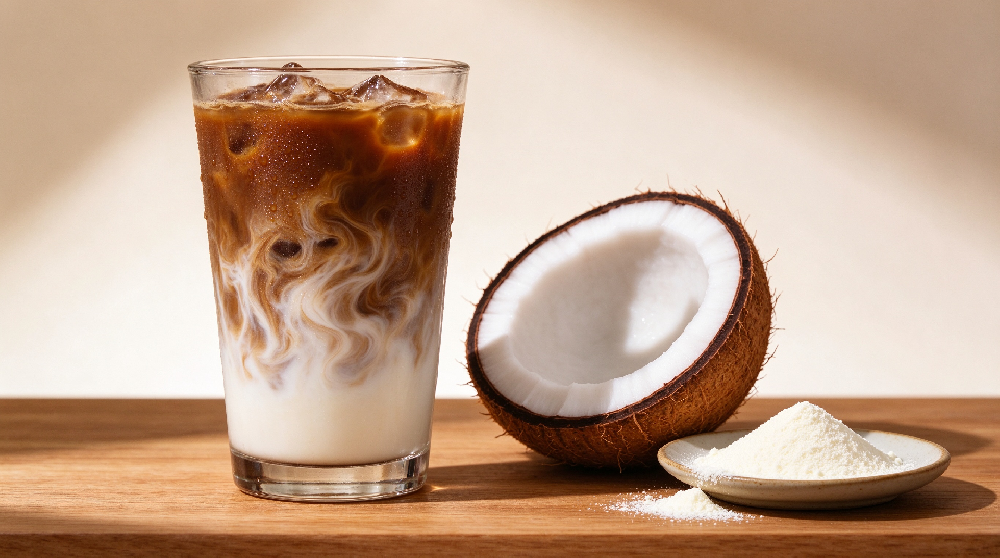
The Middle East angle.
In the Gulf, coffee culture is deeply rooted: cardamom-spiced coffee, instant coffee with creamer in the office, and a fast-growing specialty café scene. A coconut-based creamer lets a brand carry a plant-based claim while keeping the sweet, creamy profile local consumers already expect. It works in 3-in-1 style mixes as well as in the premium end of the shelf.
Southeast Asia: the volume story.
Indonesia, Malaysia, Vietnam, Thailand and the Philippines are the core markets here. Coconut is a domestic crop, milk tea and coffee chains keep expanding, and manufacturers want both cost predictability and a plant-based story they can print on the pack. Coconut creamers suit instant coffee blends, milk tea powders and blended cold drinks.
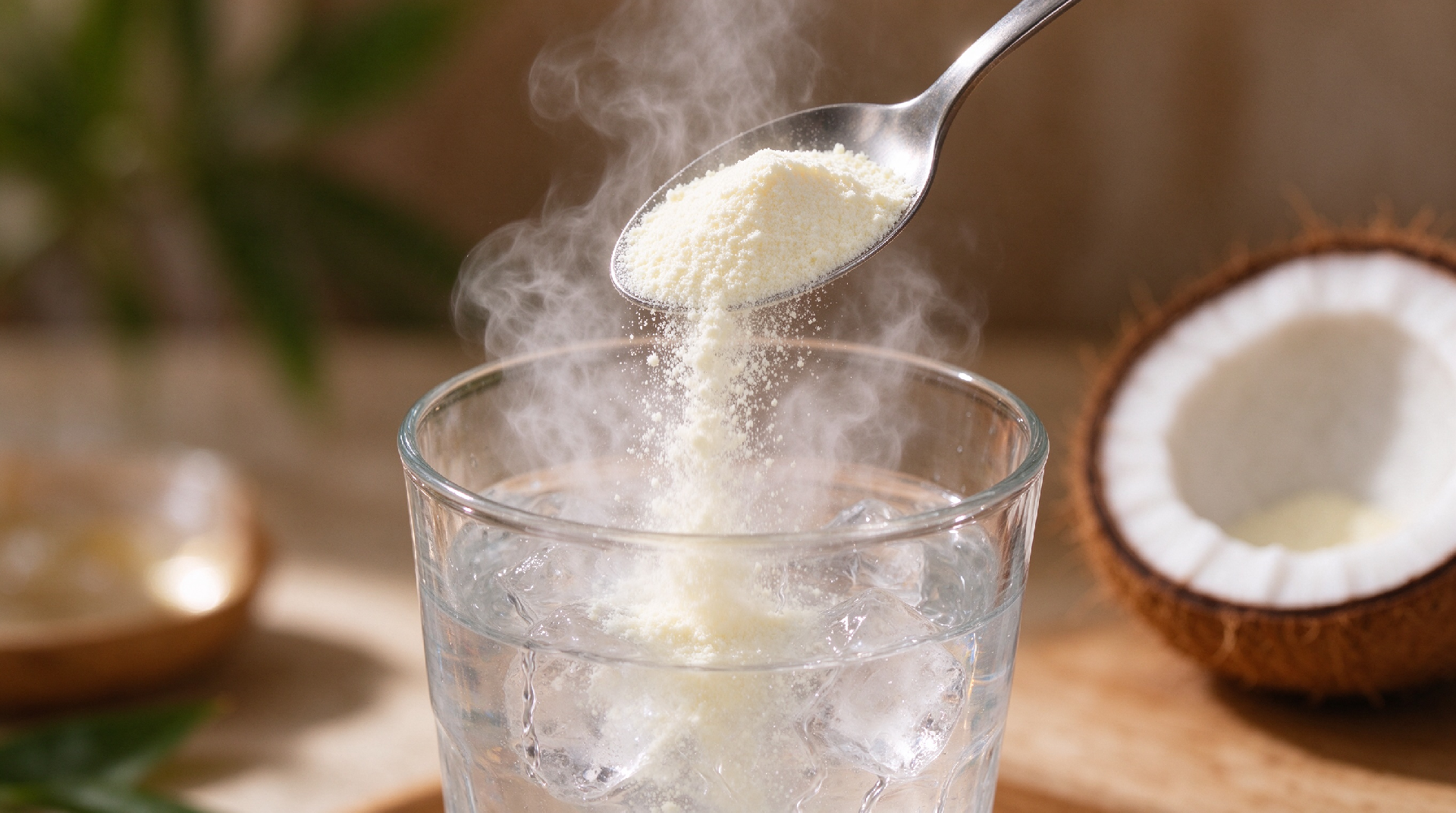
What formulators should watch.
Coconut fat behaves differently from the vegetable fats used in conventional non-dairy creamers. It melts at a lower temperature, which is an advantage in cold drinks and a genuine challenge in hot drinks and in warm warehouse conditions. That makes the carrier system and the emulsifier package the deciding factors — not the coconut content on the label. Useful checks include: does the powder still flow after a few months in tropical storage; does it dissolve in both hot and cold water; does it leave an oily film on the surface of the drink; and does the coconut note stay clean, or turn soapy over time.
A practical buyer's checklist.
Ask the supplier four questions. What is the coconut fat source, and how stable is the supply? What carrier and emulsifier system is used, and why that one? Can the product be supplied as a finished creamer, or as a coconut milk powder to be blended in-house? And can the supplier run application trials in the customer's own recipe rather than only offering a generic sample?
Jiangsu Leiva Biotech Co., Ltd. produces non-dairy creamer, whipping cream powder and instant coffee powder at its own spray-drying facility in Jiangsu, China, and supports buyers with application-specific samples and formulation advice. Final parameters such as fat content and solubility should be confirmed against the actual product data sheet.
Website: www.hengfood.com