Release time:2026-11-04
For roughly two decades the topping conversation in the bubble tea industry had only one answer: tapioca pearls. They were cheap, familiar and forgiving. They were also a bottleneck. Pearls need to be cooked, held warm, and thrown away after a few hours, which makes them awkward for delivery, for vending, and for any operator without a proper back kitchen.
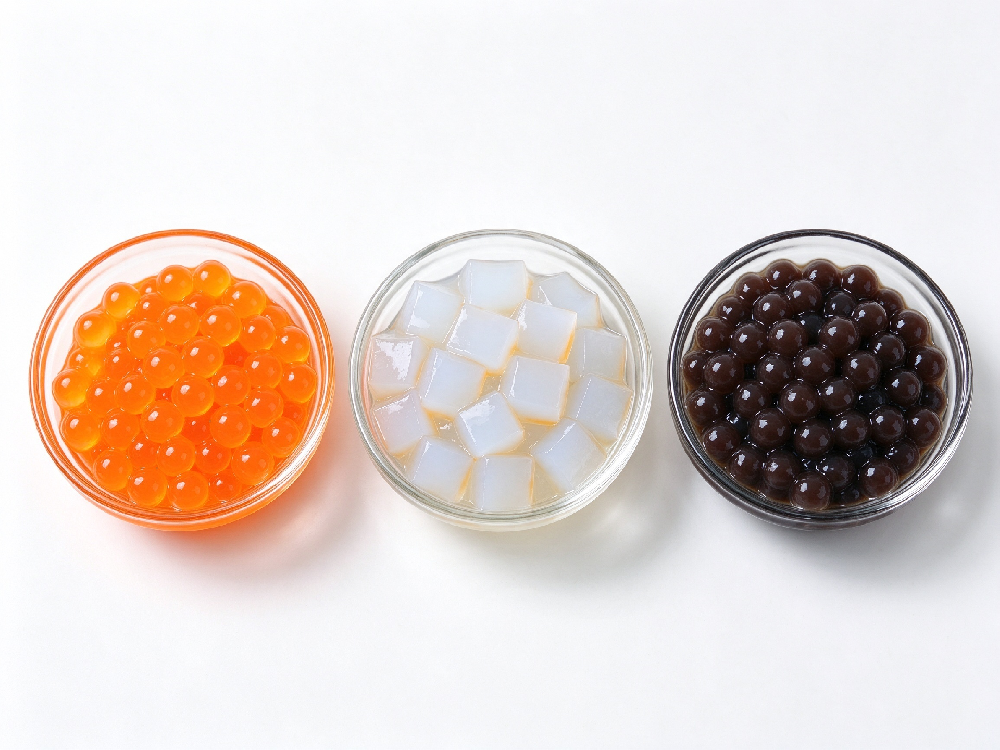
That constraint is what pushed the category sideways. Popping boba — small spheres of fruit juice enclosed in a thin calcium-alginate skin that bursts when bitten — and coconut jelly, a firm translucent cube made from fermented coconut water, both arrived as ready-to-use products. No cooking, no holding temperature, no four-hour window. An operator opens a bag, scoops, and serves. The same property that makes them convenient for a store makes them viable for channels that pearls never reached: delivery-only brands, convenience store chilled cups, and packaged dessert bowls.
Why this shifted the supply chain
Toppings used to be an afterthought bought from a local distributor. They are now a differentiation tool, and differentiation is what chains compete on. A menu with eight toppings needs eight reliable supply lines, each with consistent size, colour, texture and shelf life across shipments. That is a different procurement problem from buying tapioca starch.
It also changed who the buyer is. Popping boba and coconut jelly are manufactured products with a formulation behind them — fruit base, gelling system, acidity, sugar level, colour. Buyers increasingly want to specify these rather than accept whatever the distributor stocks, because the topping has to match the drink it sits in. A passionfruit popping boba in a milk-based drink has to hold its skin against a different pH and a different water activity than the same boba in a clear fruit tea.
Where the growth is coming from
Three regions are driving volume. Southeast Asia remains the manufacturing and consumption core, with Indonesia, Vietnam and Thailand all running dense, competitive tea shop networks where topping variety is table stakes. The Gulf has moved fast in the opposite direction — fewer stores, higher ticket, more premium positioning — and premium positioning means visible, photogenic toppings. Latin America is the newest entrant, with tea chains expanding in Mexico, Colombia and Peru and importing most of their topping supply rather than producing locally.
The powder side of the same shelf
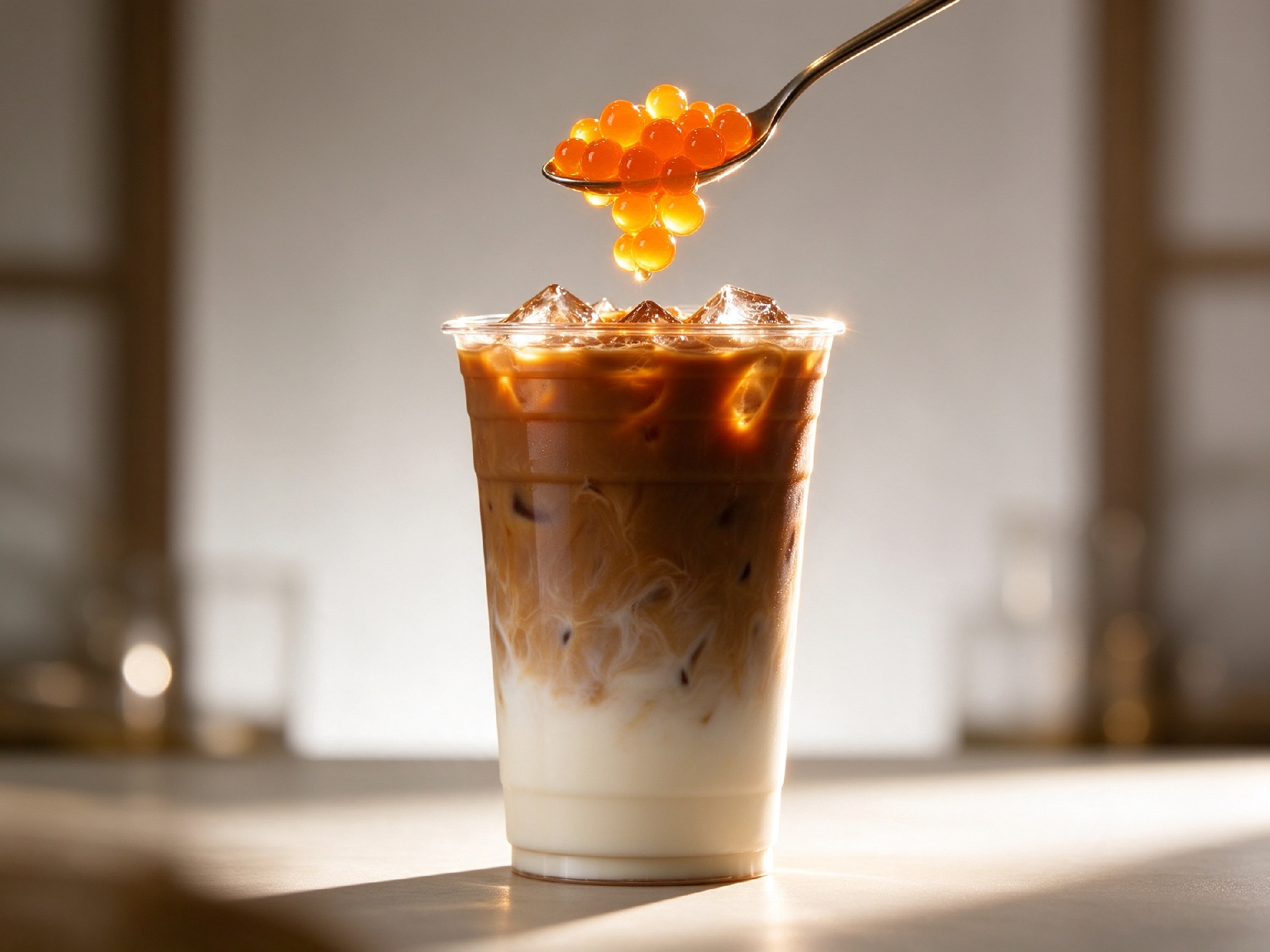
What gets overlooked is that the same store buying toppings is also buying the powder that goes underneath them. A dessert cup or a milk tea base typically needs a creamer for body, a whipping cream powder for the top layer, and increasingly a jelly powder for in-house prepared layers where the operator wants a lower cost than ready-made cubes. Selling one without the other leaves margin on the table — and leaves the customer juggling three suppliers for one menu item.
Jiangsu Leiva Biotech Co., Ltd supplies popping boba, coconut jelly, jelly powder, non-dairy creamer and whipping cream powder from a single source, which lets a customer build a complete dessert or tea menu on one purchase order. Sizes, sugar levels and fruit profiles are customizable; exact specifications are confirmed against the product data sheet.
Website: www.hengfood.com