NEWS

Whipped cream powder has become a global hit: room-temperature long-term storage + high whipping rate + zero cold chain, a new must-have for baked beverages

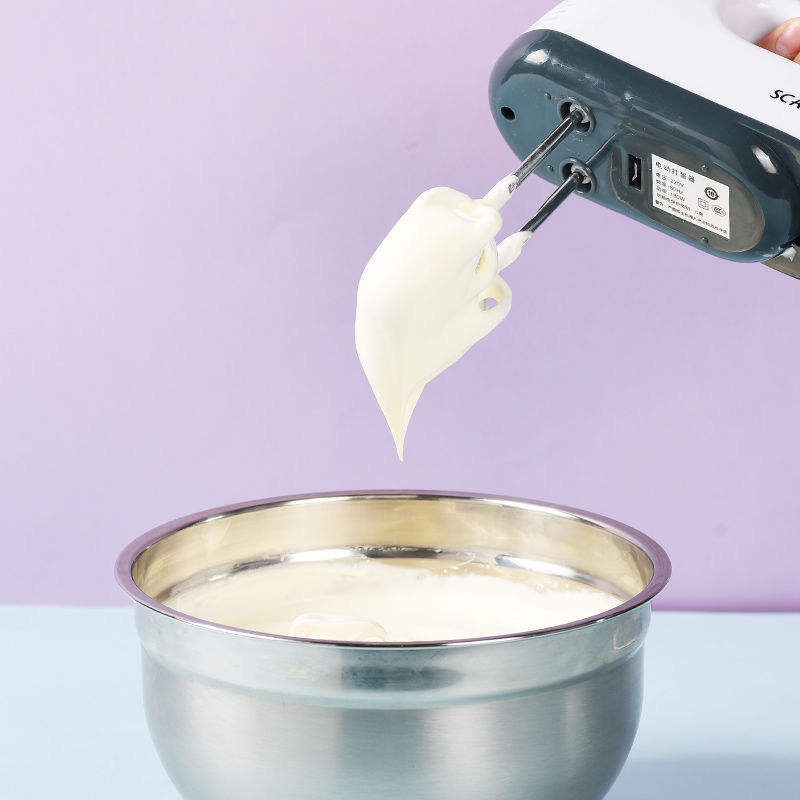
In recent years, the global baking, dessert and specialty coffee markets have exploded. Whipping Cream Powder, with its three core advantages of a 18-month shelf life at room temperature, high whipping stability and low cost, has rapidly replaced traditional liquid light cream and become a mainstream and essential raw material in the food industry and home baking. The global market size is expected to reach 1.08 billion US dollars in 2025 and increase to 2.25 billion US dollars by 2035, with a compound annual growth rate of 7.6% over the decade. The demand in Asia, the Middle East, Africa and Latin America is surging.1.  What is whipped cream Powder?Whipped cream powder is a powdered cream substitute made by spray drying process, and it is divided into two types: dairy (containing milk fat) and non-dairy (plant fat). The core ingredients include milk fat/plant fat, milk protein, glucose syrup, emulsifier and stabilizer. The powder is fine in texture and pure white in color.When in use, add 2-4℃ ice water/milk in a ratio of 1:5, and beat for 3-5 minutes to form a fine, fluffy and stable cream foam. The whipping rate can reach 300%-500%, and it can be directly used for cake decoration, filling, dessert decoration, coffee milk cap and mousse making.2. Core advantages: Outperforming traditional liquid cream • Extra-long shelf life: It can be stored at room temperature and sealed for 12-24 months, while traditional liquid cream only needs 7-10 days when refrigerated. Zero cold chain cost, significantly reducing transportation and storage losses. • Extremely strong stability: After whipping, it can withstand high temperatures, does not melt easily, does not seep water, and does not collapse. It is suitable for high-temperature environments and long-distance delivery. The piping shape lasts for a long time, and the zero trans fatty acid formula is healthier. • Outstanding cost performance: The cost of the same amount is 30%-50% lower than that of liquid cream. The high whipping rate reduces the amount used, making it suitable for industrial mass production. • Diverse applications: Compatible with both cold and hot blending, it can be used to make milk caps, mousse, ice cream, dessert fillings, coffee toppings, etc. It is suitable for people with lactose intolerance and vegetarians (plant-based version).3. Future trends: The health, functionality and convenience industries will focus on four major directions: clean labels (with fewer additives), organic raw materials, plant-based formulas and portable packaging. Meanwhile, the development of new instant dissolving and non-whipping products is accelerating, further simplifying operations and adapting to a fast-paced life. Industry experts say that whipped cream powder conforms to the global consumption trend of health, convenience and high cost performance, and will long dominate the cream replacement market, becoming a core basic raw material in the baking and beverage industries.
2026-05-25
View details

Nitro Coffee Takes the World by Storm: "Velvety Texture & Dairy-Free" Become the New Coffee Favorite

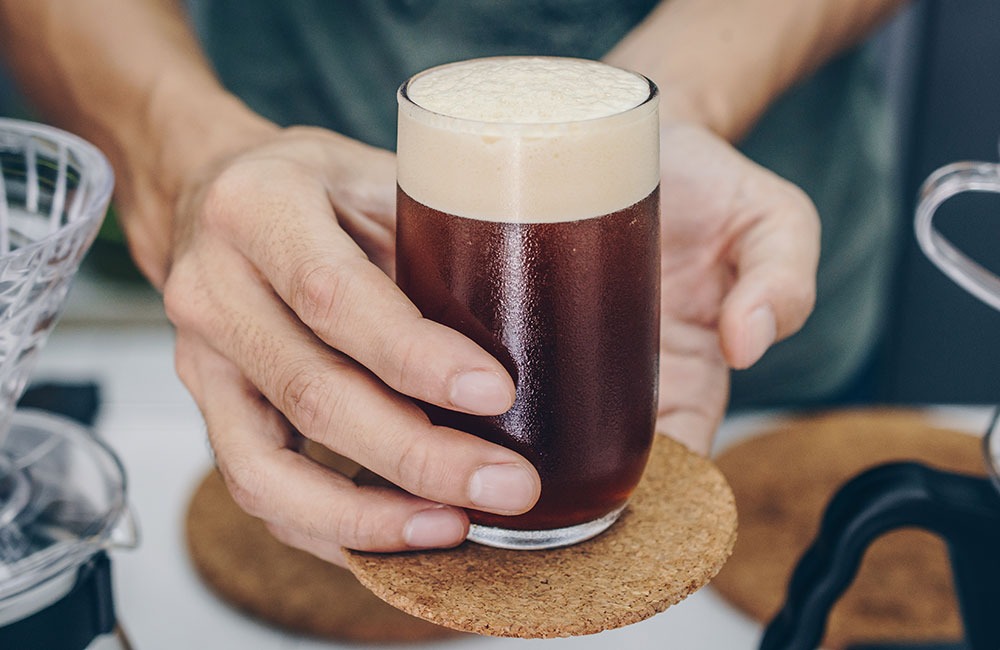
In recent years, Nitro Coffee has quickly expanded from specialty coffee circles to dominate the global market, emerging as the most disruptive coffee category after cold brew. Originating in the United States in the early 2010s, this innovative beverage has rapidly won over young consumers with its core advantages of velvety smooth texture, naturally low acidity, and no dairy or sugar required. The global market size exceeded USD 7.41 billion in 2025 and is projected to reach USD 12.72 billion by 2035, with a CAGR of 5.6%.1. What Is Nitro Coffee?Nitro Coffee is based on cold brew coffee (coffee grounds steeped in cold water for 12-24 hours) and infused with food-grade nitrogen (N₂) under high pressure, forming fine microbubbles of 50-100 microns. When poured, it features a "cascading foam" effect like stout beer, with 60% higher smoothness and 40% lower acidity than regular cold brew. It has a natural sweet finish, delivering a creamy, rich taste without added milk or sugar—ideal for lactose-intolerant and sugar-conscious consumers.2. Core Advantages: Healthy, Convenient & Cost-EffectiveNaturally Healthy: No dairy, sugar, or additives. Nitrogen prevents oxidation, extending shelf life to 6 months. It contains 1.5 times more caffeine than regular drip coffee and is rich in antioxidants.Unique Texture: Microbubbles create a melt-in-mouth velvety sensation with mild bitterness and full aroma, redefining the traditional coffee experience.Portable & Storable: Shelf-stable at room temperature, no cold chain required. The canned design is portable and reduces cross-border logistics costs, making it highly popular in foreign trade markets.3. Future Trends: Innovation & Continuous LeadershipWith consumption upgrading, nitro coffee continues to innovate, focusing on flavor expansion (vanilla, hazelnut, coconut), low-caffeine formulas, and organic ingredients. Meanwhile, the popularity of home nitro equipment has made "homemade nitro coffee" a new lifestyle trend. Industry experts emphasize that nitro coffee aligns with consumer trends of "health, convenience, and high quality," securing its position as a long-term mainstream coffee category and a key symbol of global coffee culture. www.hengfood.com
2026-05-25
View details

Freeze-Dried Boom, Domestic Upgrade & Health-Focused Trend

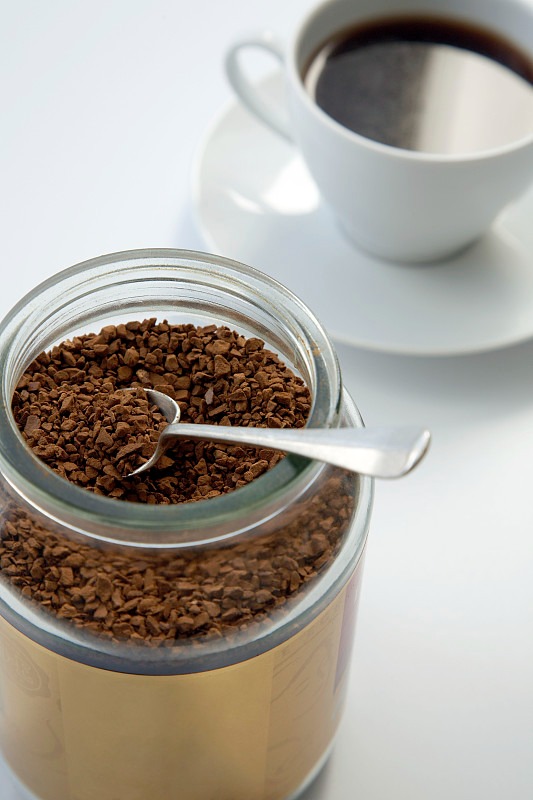
Freeze-Dried Boom, Domestic Upgrade & Health-Focused TrendIn 2026, China’s coffee powder market continues its robust growth, with the industry scale projected to reach CNY 14.69 billion, a 14.2% year-on-year increase. Driven by consumption upgrading and technological innovation, coffee powder is shifting from “instant necessity” to “premium experience,” with freeze-dried coffee, single-origin, clean label, and functional benefits as the four key trends.1. Market Overview: Rising Per Capita Consumption, Gen Z LeadsIn 2025, China’s per capita annual coffee powder consumption reached 0.92 kg, up 16.5% from 2024. Gen Z shows a 68.4% online repurchase rate, favoring single-origin beans (52.1%), medium-light roast (47.6%), and nitrogen-sealed packaging. E-commerce accounts for over 38% of sales, becoming the fastest-growing channel.2. Product Structure: Freeze-Dried Coffee Explodes, Traditional Instant DeclinesFreeze-dried coffee powder is the biggest winner: high flavor retention, fast dissolution, and rich aroma. Its market share is expected to exceed 30% in 2026. Major domestic players and Yunnan producers are building 10,000-ton freeze-dried lines; Chinese freeze-dried coffee now matches Japanese/Korean quality at lower prices. Conventional spray-dried instant coffee continues to decline, replaced by premium, small-batch, multi-SKU offerings.3. Supply Chain: Yunnan Coffee Rises, Global Pattern ShiftsYunnan coffee reaches a branding turning point: its deep processing rate exceeds 40% in 2026, shifting from “raw bean export” to “brand building”. New 10,000-ton instant/freeze-dried projects in Pu’er and Honghe drive standardized farming upgrades. Globally, Brazil’s bumper crop (66.2 million bags expected in 2026) and Vietnam’s rising exports reshape supply; Indian freeze-dried coffee becomes a favorite for European and American private labels.4. Tech & Health: AI Roasting, Clean Label, Functional InnovationAI-powered roasting: precise temperature control, 99.5% batch consistencyCryogenic grinding: doubles solubility for cold-brew powderClean label/low-calorie: no artificial flavors, no added sugar, low fatFunctional coffee: white kidney bean, electrolyte, and probiotic coffee gain traction5. Trend Outlook (2026–2028)The coffee powder industry will see: accelerated premiumization, freeze-dried dominance, domestic substitution, health & functional focus, and supply chain transparency. For brands, securing premium origins, mastering freeze-dried/cold-brew tech, and building differentiated flavor profiles will be core competitive advantages.www.hengfood.com
2026-05-18
View details

Thick, Warm and Cheap: Latin America's Atole, Champurrado and Horchata Are Moving Into Powder

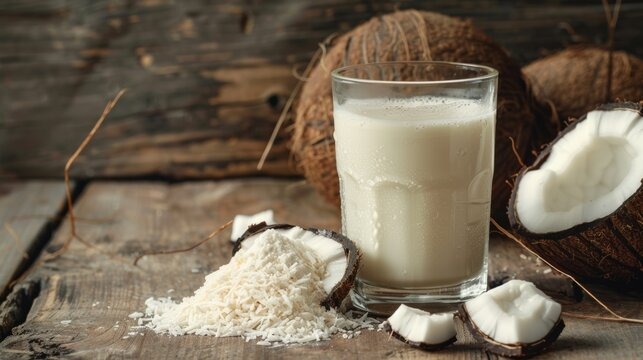
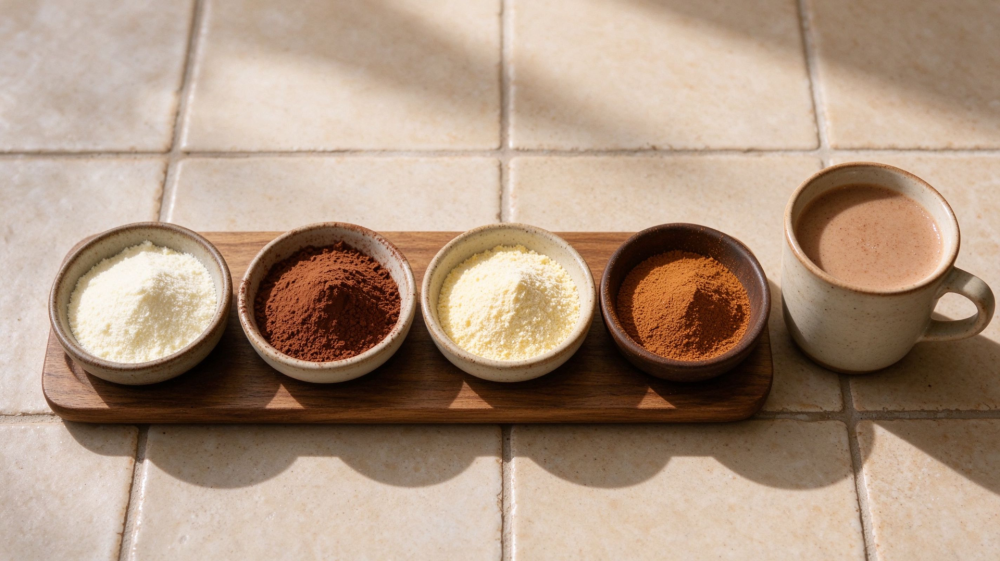
Walk into a market stall in Mexico City at seven in the morning and you will likely see a clay pot of atole simmering next to a stack of plastic cups. Atole is a thick, warm drink built on maize — masa or corn flour cooked into liquid, sweetened, often scented with cinnamon or vanilla. Add chocolate and it becomes champurrado, the drink of December posadas. Horchata, its cold cousin, is rice, cinnamon and sugar over ice.These are not niche drinks. They are daily, cheap, and sold by the cup from kiosks, street carts, small cafés and convenience stores. What is changing is how they are made. Labour in city centres is expensive, and a vendor cannot spend forty minutes stirring corn flour into hot milk before opening. Increasingly the base arrives as a powder: portioned sachets for the kiosk, 20–25 kg bags for the institutional kitchen and the bottler.What a powdered thick drink actually demandsFormulating these drinks is harder than instant coffee. Four requirements pull against each other.Body without gumminess. Atole should coat the tongue, not turn into wallpaper paste. Starch-based thickeners deliver body cheaply, but they gelatinise unevenly in hot liquid, form lumps, and turn gluey once the drink cools. A well-designed base combines starch with fat and protein so the viscosity feels rounded rather than slick.Creaminess without fresh milk. Most street vendors have no cold chain. Non-dairy creamer and fat-filled milk powder supply the fatty mouthfeel and the whitening effect that milk would otherwise contribute, from a shelf-stable bag. Fat level drives the perception of richness far more than total solids do.Cocoa that behaves. In champurrado the cocoa is not a flavouring, it is half the identity. Natural cocoa brings acidity and a reddish-brown colour; alkalised cocoa brings a darker, smoother, more chocolate-forward cup. Choosing between them changes both taste and appearance, and the choice interacts with the starch system — high-acidity cocoa can push a starch base toward thinning during cooking.Cinnamon and spice that survive. Ground cinnamon carries volatile oils that fade in storage and bind unevenly in a dry mix. Fine grinding helps dispersion but accelerates aroma loss — a shelf-life question as much as a flavour one.Where the growth isThree channels are driving the shift. Small-format retail — the corner shop and the kiosk — sells single-serve sachets at a price point that competes with a homemade batch. Food service chains want a repeatable cup, which means a fixed grammage and a fixed water line rather than a cook's judgement. And industrial bottlers of ready-to-drink atole and horchata need a base that disperses in a high-shear tank without foaming over or settling out.Each channel wants something different. A kiosk cares about dissolving in a cup with a spoon. A bottler cares about hydration behaviour in a 2,000-litre tank and about sediment over ninety days. One powder rarely serves both.The practical lessonLatin America's thick drinks are not a coffee story with a different label. They are a starch-and-fat story, and the ingredient set that wins is the one that keeps texture stable from the cooking pot to the chilled bottle. Suppliers who can adjust fat level, cocoa type and dispersion behaviour independently have the advantage, because every market has its own idea of how thick "thick" should be.Jiangsu Leiva Biotech Co., Ltd supplies non-dairy creamer, fat-filled milk powder, whipping cream powder, cocoa powder (natural and alkalised), coconut cream powder and instant coffee powder for this kind of formulation work. Specs vary by product and are confirmed against the data sheet; customised specs available on request.Website: www.hengfood.com
2026-11-25
View details