NEWS

Why Spray-Dried Powder Becomes Ideal Raw Material for Instant Solid Beverages

As instant solid beverages continue to expand across global markets, food manufacturers pay more attention to raw material stability, transportation cost and formula compatibility. Compared with liquid raw materials, spray-dried powder gradually becomes the mainstream choice for mass production of bagged milk tea, 3-in-1 coffee, meal replacement powder and compound solid drinks.Spray drying technology converts liquid emulsion into uniform fine powder under high temperature. The microencapsulation structure effectively locks flavor and grease, greatly slowing down oxidation deterioration. This characteristic brings a longer shelf life without complicated cold chain storage, which is especially suitable for long-distance ocean export to Southeast Asia, the Middle East and Africa.Solubility is another core advantage. Qualified spray-dried powder can disperse evenly in hot or cold water, avoiding sedimentation and agglomeration during brewing. When factories carry out dry blending production, non-dairy creamer, coffee powder and sweetener can be mixed proportionally directly, simplifying the whole production flow and reducing production failure rate.From the perspective of supply chain, powder raw materials reduce weight and volume after dehydration. The same container can load more finished raw materials, cutting unit ocean freight. Meanwhile, powder products adopt sealed 25kg food-grade packaging, effectively preventing leakage and contamination during transportation.Different terminal products require customized powder indicators. For thick milk tea, high-fat spray-dried creamer with strong foaming performance is recommended. For instant black coffee series, spray-dried coffee powder with balanced bitterness and aroma works better. Low-sugar solid drinks can match compound spray-dried sweetener powder to simplify formula adjustment.More and more beverage brands stop purchasing single raw materials separately. They hope suppliers can provide matched powder combination solutions. Manufacturers owning complete spray-drying production lines have obvious advantages in formula test, small batch trial order and stable mass supply.Our factory produces a full series of spray-dried powder including non-dairy creamer, instant coffee powder and customized compound powder. We support formula trial production according to customers’ finished product standards, provide stable quality and complete batch inspection documents, and supply raw materials for solid beverage manufacturers all over the world.website:https://www.hengfood.com
2026-07-22
View details

Application Scenarios & Market Value of High Fat Non-Dairy Creamer Spray Powder

Against the background of differentiated upgrading in global solid beverage and food raw material industry, ordinary non-dairy creamer is facing fierce price competition. High fat spray-dried non-dairy creamer stands out with thick taste, outstanding solubility and long shelf life, and has become a popular customized raw material for food and beverage manufacturers worldwide in 2026.High fat creamer is produced by high-temperature spray drying and microencapsulation technology. It effectively wraps grease inside powder particles, avoiding oxidation and rancidity during storage. Compared with conventional creamer, it delivers stronger milk aroma, thicker mouthfeel and better suspension effect after brewing, which greatly improves the texture of finished products. It can be divided into three core application fields according to formula and fat proportion.First of all, it is the core raw material for thick milk tea and instant coffee. High fat creamer can create rich milk foam and obvious hanging cup effect, perfectly matching thick milk tea, milk cap base and bagged instant milk tea. When blended with coffee powder, it produces a mellow latte taste without extra fresh milk, which greatly simplifies the production process for beverage factories and chain stores.Secondly, this powder is widely used in bakery, candy and ice cream industry. With high oil wrapping rate and high temperature resistance, it can replace part of cream and liquid vegetable oil in cookies, sandwich candies and pastry premix powder. It enhances crispness and milk fragrance of baked goods, and helps ice cream maintain stable shape and delicate taste during freezing and transportation, reducing raw material loss in mass industrial production.In addition, plant-based high-fat microcapsule powder is increasingly popular in the health food market. MCT fat powder and coconut base fat powder adopt clean label formula with zero trans fatty acids. They are easy to digest and absorb, and are essential ingredients for keto meal replacement powder and sports nutrition drinks, meeting the demand of low-sugar and high-energy healthy eating.The whole industry is gradually shifting from standardized bulk supply to personalized formula customization. Different customers put forward differentiated requirements on fat content, flavor intensity and cold water solubility according to their terminal products. Manufacturers with independent spray drying production lines and R&D capabilities gain more advantages in overseas cooperation.Our company specializes in the production of spray-dried powder series including high fat non-dairy creamer. We support flexible adjustment of fat content and formula design, strictly control zero trans fat in production, and provide complete batch COA inspection documents. We can supply high-quality powder raw materials in batches and cooperate with global buyers for long-term OEM and customized orders. website:https://www.hengfood.com
2026-07-17
View details

Popular Coffee Types Explained | Americano, Latte, Cappuccino, Mocha Market Trend 2026

Global coffee consumption continues to grow steadily in 2026, with diversified consumer preferences driving the innovation of coffee beverages. From pure black coffee to creamy milk coffee and chocolate-flavored coffee, different coffee types occupy distinct market segments. Meanwhile, the upgrading of spray-dried and freeze-dried coffee powder technology further promotes the standardized production and global popularization of various coffee drinks.Mainstream coffee beverages on the market are mostly based on espresso, with different ratios of water, steamed milk and foam to form unique flavors and textures. The four most popular categories are Americano, Latte, Cappuccino and Mocha, covering light, mellow, creamy and sweet flavor demands.Americano is a classic black coffee made by diluting espresso with hot water. It features a clean, pure coffee taste with low bitterness and light body, conforming to the global healthy and low-sugar consumption trend in recent years. It is the preferred drink for office workers and fitness groups, and cold-brew Americano has become a fast-growing cold coffee category in the market.Latte is the most popular milk coffee worldwide. It consists of espresso with a large proportion of steamed milk and a thin layer of milk foam. With smooth, mild and creamy taste, it has strong market adaptability and occupies the largest share in specialty coffee consumption, suitable for all-age consumer groups.Cappuccino features a balanced ratio of espresso, steamed milk and thick milk foam. It has a rich layered texture and strong coffee aroma, more mellow than Americano and less greasy than Latte. Its classic frothy taste keeps it popular in traditional coffee markets all year round.Mocha is a typical dessert-style coffee, blended with espresso, steamed milk and chocolate flavor. The perfect combination of coffee bitterness and chocolate sweetness creates a rich taste, favored by consumers who prefer sweet flavors. It is widely used in casual catering and afternoon tea scenarios.Industry data shows that diversified milk coffee and flavored coffee maintain stable market demand, while pure black coffee continues to grow with the clean label trend. In order to meet standardized mass production and portable brewing needs, more beverage brands choose high-quality instant coffee powder as the core raw material.Both spray-dried coffee powder and freeze-dried coffee powder can perfectly match different coffee formulas. Spray-dried powder is cost-effective and stable for mass commercial production of Latte, Cappuccino and Mocha. Freeze-dried powder retains original coffee aroma to the maximum, more suitable for high-end Americano and specialty cold brew coffee products.We provide professional spray-dried coffee powder and freeze-dried coffee powder with stable flavor and high solubility. Customized formula solutions for various coffee types are available to support bulk procurement and global export, helping food and beverage manufacturers create differentiated coffee beverage products. website:https://www.hengfood.com
2026-07-15
View details

Non-dairy Creamer & Spray Dried Powder 2026 Market & Export Trend

Driven by instant coffee, milk tea and solid beverage industries, the market of non-dairy creamer and high-temperature spray-dried food powder keeps growing steadily in 2026. Consumer health demands and stricter global food regulations push the whole industry toward functional, clean label and customized production.Industry statistics show that China’s non-dairy creamer and spray powder market size is projected to hit 14.5 billion RMB in 2026, rising 26.1% year on year. Thanks to stable quality and convenient storage, spray-dried creamer serves as essential raw material for coffee partners, milk tea mixes and bakery powders with lasting market demand.In export business, China exported spray-dried food powders worth 380 million USD in 2025, with a 19.2% year-on-year increase. Southeast Asia, the Middle East and Latin America are top three overseas destinations, where coffee creamer and milk tea powder are the best-selling items. Supported by mature spray drying production lines, Chinese powder ingredients enjoy great popularity among global food processors.Traditional basic economical creamer is trapped in severe price competition with shrinking profit margins. On the contrary, cold-soluble, high-protein, sugar-free and clean label compound powders gain obvious premium advantages, perfectly fitting cold brew drinks and low-calorie healthy food.More downstream brands choose to purchase base spray powder and make self-formula blending, leading to rising demands for formula customization and OEM orders. Top suppliers focus on emulsion optimization and flavor locking technology. Complete quality inspection and international export certification have become core competitive strengths in this sector.Our factory specializes in spray-dried powder and freeze-dried coffee powder production. We supply regular non-dairy creamer, cold soluble powder, sugar-free compound powder and coffee base materials. Custom formulas, OEM processing and full set of export documents are available to offer reliable raw material solutions for global partners.website:https://www.hengfood.com
2026-07-11
View details

Various Sweeteners: Ingredient Characteristics, Application Scenarios, and the Current State of the Domestic Supply Chain

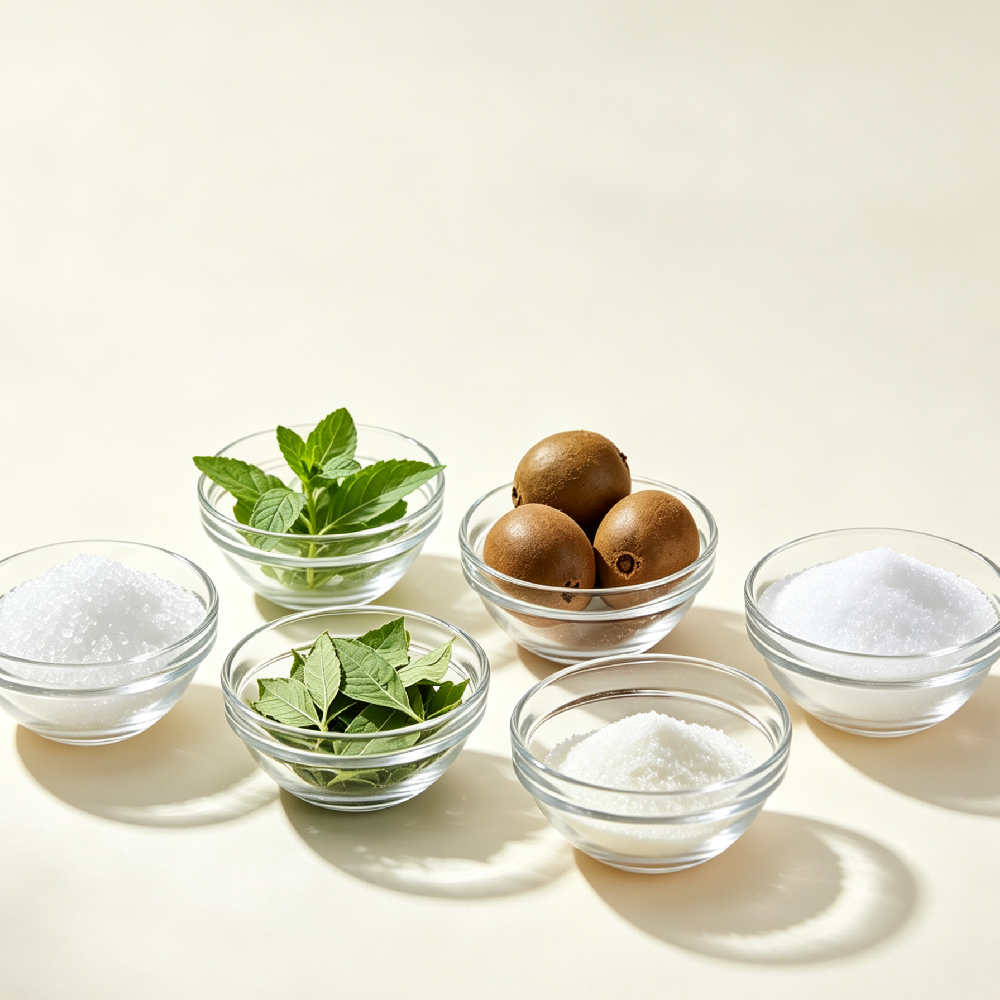
Basic Product IntroductionSweeteners are food ingredients that endow food with sweet taste and replace traditional sucrose. They are featured by low or zero calorie content and much higher sweetness than ordinary table sugar. Widely applied in beverages, baking, snacks, health food and oral care products, they serve as core raw materials for sugar reduction formulas in food industry. They are mainly divided into three categories by source and production process.1. Artificial High-intensity SweetenersSynthesized via chemical processes, 200 to 600 times sweeter than sucrose with extremely low dosage and low cost, varying greatly in thermal stability.Sucralose:It is about 600 times sweeter than sucrose, resistant to high temperatures and acids and alkalis, and suitable for baking, beverages, and canned goods, making it the most versatile product for various applications.Aspartame:It is about 200 times sweeter, cannot withstand high temperatures, and is mostly used in cold drinks and chewing gum. People with phenylketonuria should not consume it.Acesulfame Potassium:It is 200 times sweeter, highly stable, and often used in combination with other sweeteners.2. Sugar AlcoholsMostly produced by microbial fermentation and naturally traceable in fruits and vegetables. Their sweetness is close to sucrose with low human absorption and negligible blood sugar elevation.Erythritol:With almost zero calories and no involvement in blood sugar metabolism, it has a refreshing coolness and is a mainstream ingredient in sugar-free sparkling water and meal replacements.Xylitol:Its sweetness is similar to that of sucrose, and it has an outstanding effect in preventing tooth decay. It is often used in chewing gum and sugar-free pastries.3. Natural Plant-extracted SweetenersExtracted and processed from plant roots, stems and fruits, highlighted with natural properties to meet demands for clean label products.Steviol Glycosides:Derived from stevia, it is 200-300 times sweeter and has strong antioxidant properties. It is often used in tea and bottled beverages.Monk Fruit Extract:Derived from monk fruit, it has a natural flavor without any bitter aftertaste and is often used in high-end sugar-free foods and household sugar substitutes.Nutritional ProfileSugar & calorie control to cut energy intake10 grams of conventional sucrose contain around 40 kcal, easily leading to excess calorie intake and sharp blood sugar spikes. Most certified sweeteners are barely digested or absorbed by human body with nearly zero calories and mild impact on postprandial blood glucose, ideal for weight-loss groups, diabetics and people under weight management as sucrose substitutes.Lower risk of dental cariesSucrose is decomposed by oral bacteria into acid that erodes tooth enamel, while sweeteners cannot be fermented into acid by oral flora, effectively reducing cavities and dental plaque when applied in toothpaste, mouthwash and sugar-free candies.Distinct metabolic features by categoryExcessive intake of sugar alcohols may cause mild bloating and diarrhea due to intestinal fermentation. Within legal dosage limits, natural plant sweeteners and high-intensity synthetic sweeteners have been certified safe by JECFA and China’s national standard GB2760, and are safe for standardized addition.Additional functional benefitsSteviol glycosides contain polyphenols with antioxidant activity; Allulose supports Maillard browning reaction with flavor and color similar to sucrose, and acts as prebiotics to assist intestinal regulation.Industry News & Market TrendsConsumer sideSugar reduction policies fuel expansion of sugar-free trackChina’s national nutrition initiative of reducing salt, oil and sugar plus sugar tax guidance in multiple regions prompt consumers to avoid added sugar. The market of sugar-free drinks, zero-calorie snacks and light meal replacements keeps expanding year by year. Small-pack household sweeteners and baking-specific substitutes become daily consumer goods, shifting sweeteners from industrial raw materials to popular retail products.Product sideShift from single sweetener to compound formulasSingle sweeteners often leave bitter aftertaste and thin taste. Compound blending of sugar alcohols, natural extracts and synthetic sweeteners has become the mainstream formula for food enterprises, which improves flavor, reduces dosage of single material and cuts production cost.Raw material industryLeading domestic production capacity with steady export growthChina ranks as the world’s top producer of sucralose, acesulfame potassium, erythritol and steviol glycosides with complete industrial chains among leading manufacturers. Overseas demand rebounds in 2026 with rising export orders, and global brands rely heavily on China’s supply chain for raw material procurement.Long-term developmentNaturalization, refinement and functional segmentationMarket preference shifts from synthetic to naturally sourced sweeteners, with expanded production capacity of monk fruit extract, enzyme-modified stevia and rare sugars including allulose and tagatose. National standard GB2760 updates usage specifications to eliminate unqualified small-scale workshops. The whole industry upgrades toward standardization, traceability and clean labels, while functional special sweeteners open new opportunities in health food sector. website:www.hengfood.comwebsite:https://www.hengfood.com
2026-07-08
View details