NEWS

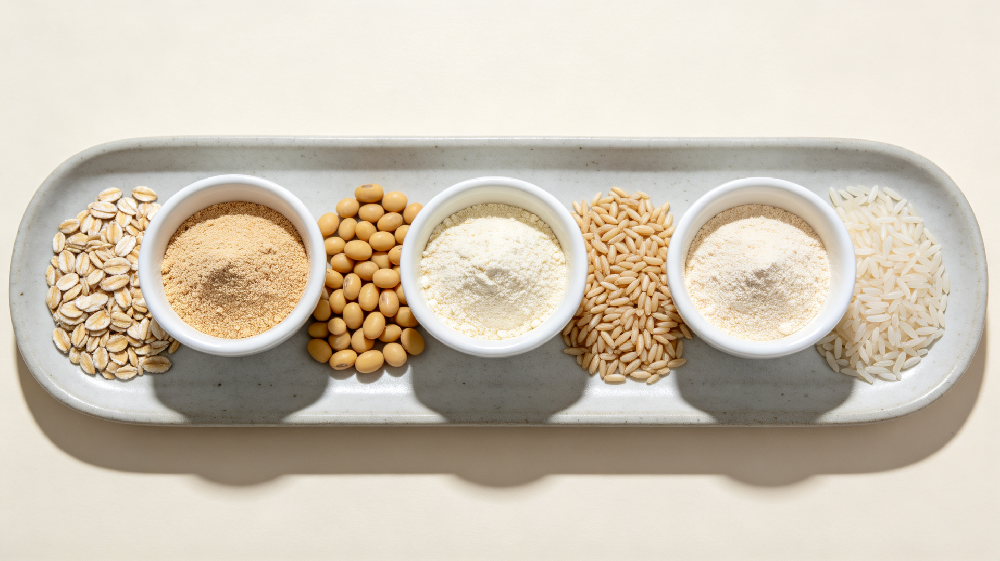
Oat, Soy or Rice: Choosing the Right Base for Plant-Based Powdered Creamers

Plant-based creamers look interchangeable on a spec sheet and behave nothing alike in a cup. Three bases dominate the category — oat, soy and rice — and each one fails in a different way. Picking the wrong one is not a marketing problem, it is a formulation problem that shows up as sediment, thinning or an aftertaste the customer cannot fix with more sugar.Oat: the mouthfeel winner, the stability challengeOat brings beta-glucan, which is what gives oat drinks their characteristic rounded, slightly creamy body. That is also the source of trouble. Beta-glucan thickens over time and is prone to settling in powdered systems, especially at higher inclusion levels. Oat-based creamers usually need a hydrocolloid system to hold viscosity stable through shelf life, and they are sensitive to the temperature profile during reconstitution — mixed into water that is too cool, they hydrate slowly and leave a grainy film on the surface.Where oat wins clearly is coffee. The cereal note sits well against roasted flavours, and the body holds up in a hot drink better than rice does. For a café-style product, oat is usually the first base to test.Soy: the protein workhorseSoy offers something the other two do not — real protein, at levels that contribute both body and emulsifying capacity. That makes soy-based creamers the most robust in acidic or high-heat applications, and the most useful where the product claims protein on the label. The trade-off is flavour. Soy carries a beany, slightly green note that becomes more visible as sugar is reduced, and the protein itself is prone to thermal coagulation if the process is not controlled. Soy grades vary widely by protein content and by processing, so the specification matters more here than for the other two bases.Rice: neutral, thin, and often underestimatedRice is the quiet one. It has almost no flavour of its own, no allergen story to manage, and a clean, neutral sweetness that works well in delicate formulations — tea-based drinks, fruit-flavoured powders, products aimed at children. What it lacks is body. A rice-based creamer on its own reads thin and watery, so it is almost always paired with added fat, a hydrocolloid, or a complementary base. Used as a blend component rather than a standalone base, rice is often the cheapest way to soften a formulation without adding flavour.The practical selection pathStart from the application, not the ingredient. A hot coffee creamer leads to oat. A high-protein or acidic beverage leads to soy. A delicate tea or fruit drink leads to rice, usually in a blend. Then test three things before committing: reconstitution in the actual water temperature the end user will use, sediment after 24 hours at ambient, and taste at the sugar level the final product will actually carry — not the sweet prototype that hides every defect.Jiangsu Leiva Biotech Co., Ltd produces oat, soy and rice based creamer powders alongside non-dairy creamer, whipping cream powder and Fat Filled Milk Powder, and can build blend ratios around a customer's target application. Protein content, fat level and solubility are confirmed per product data sheet; customised specifications are available on request.Website: www.hengfood.com
2026-11-06
View details

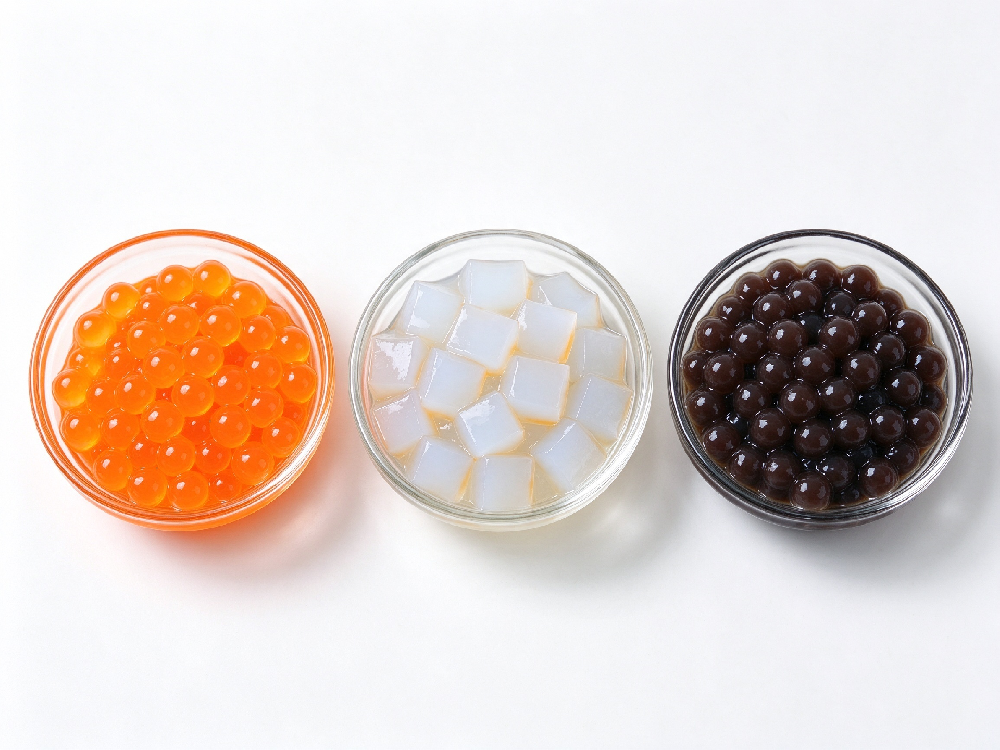
Beyond the Pearl: How Popping Boba and Coconut Jelly Rewrote the Topping Supply Chain

For roughly two decades the topping conversation in the bubble tea industry had only one answer: tapioca pearls. They were cheap, familiar and forgiving. They were also a bottleneck. Pearls need to be cooked, held warm, and thrown away after a few hours, which makes them awkward for delivery, for vending, and for any operator without a proper back kitchen.That constraint is what pushed the category sideways. Popping boba — small spheres of fruit juice enclosed in a thin calcium-alginate skin that bursts when bitten — and coconut jelly, a firm translucent cube made from fermented coconut water, both arrived as ready-to-use products. No cooking, no holding temperature, no four-hour window. An operator opens a bag, scoops, and serves. The same property that makes them convenient for a store makes them viable for channels that pearls never reached: delivery-only brands, convenience store chilled cups, and packaged dessert bowls.Why this shifted the supply chainToppings used to be an afterthought bought from a local distributor. They are now a differentiation tool, and differentiation is what chains compete on. A menu with eight toppings needs eight reliable supply lines, each with consistent size, colour, texture and shelf life across shipments. That is a different procurement problem from buying tapioca starch.It also changed who the buyer is. Popping boba and coconut jelly are manufactured products with a formulation behind them — fruit base, gelling system, acidity, sugar level, colour. Buyers increasingly want to specify these rather than accept whatever the distributor stocks, because the topping has to match the drink it sits in. A passionfruit popping boba in a milk-based drink has to hold its skin against a different pH and a different water activity than the same boba in a clear fruit tea.Where the growth is coming fromThree regions are driving volume. Southeast Asia remains the manufacturing and consumption core, with Indonesia, Vietnam and Thailand all running dense, competitive tea shop networks where topping variety is table stakes. The Gulf has moved fast in the opposite direction — fewer stores, higher ticket, more premium positioning — and premium positioning means visible, photogenic toppings. Latin America is the newest entrant, with tea chains expanding in Mexico, Colombia and Peru and importing most of their topping supply rather than producing locally.The powder side of the same shelfWhat gets overlooked is that the same store buying toppings is also buying the powder that goes underneath them. A dessert cup or a milk tea base typically needs a creamer for body, a whipping cream powder for the top layer, and increasingly a jelly powder for in-house prepared layers where the operator wants a lower cost than ready-made cubes. Selling one without the other leaves margin on the table — and leaves the customer juggling three suppliers for one menu item.Jiangsu Leiva Biotech Co., Ltd supplies popping boba, coconut jelly, jelly powder, non-dairy creamer and whipping cream powder from a single source, which lets a customer build a complete dessert or tea menu on one purchase order. Sizes, sugar levels and fruit profiles are customizable; exact specifications are confirmed against the product data sheet.Website: www.hengfood.com
2026-11-04
View details

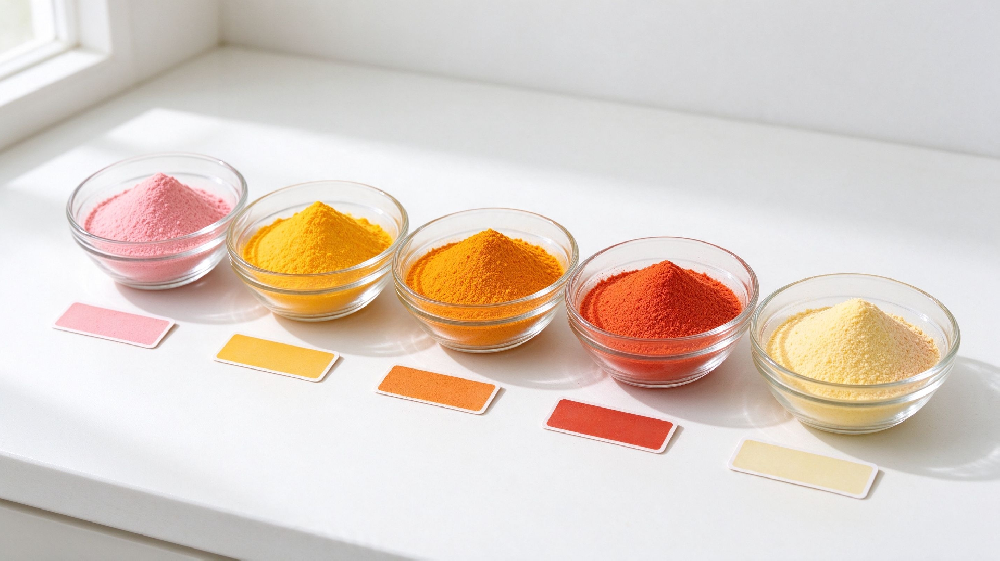
Fruit and Vegetable Powders: Colour, Flavour and the Details That Decide the Result

Open a bag of strawberry powder and you expect pink. Open it six months later in a warehouse in a hot climate and you may get something closer to beige. That gap — between the colour on the concept sheet and the colour in the finished drink — is where most fruit and vegetable powder projects succeed or fail.What the powder is actually forBuyers usually come for one of three reasons. Colour: cutting or replacing synthetic colourants while keeping a label story consumers accept. Flavour: a fruit or vegetable note that reads as real rather than as a flavour-house top note. Body: the natural sugars and fibre in fruit powders add mouthfeel that a flavour-and-sweetener system alone cannot deliver.Tomato, pumpkin, strawberry, mango and apple cover most of the demand, and each behaves differently. Tomato and pumpkin carry colour and savoury body but bring a vegetal note that has to be either masked or embraced. Strawberry and mango are colour- and aroma-driven, and both are heat-sensitive. Apple is the quiet workhorse — mild, high in natural sugar, useful for body and acidity balance.Where the difficulty startsDrying is the first stress test. Heat removes water, and it also removes the volatile compounds that make fruit smell like fruit; the pigments degrade on roughly the same curve. A powder can look perfect on a spec sheet — moisture, solubility, mesh — and still lose most of its aroma within weeks.The second problem is water activity and caking. Fruit powders are hygroscopic; in a humid climate an opened bag starts to lump within days. Packaging barrier, desiccant strategy and the choice of carrier matter more than most buyers expect.The third is colour stability in the finished product. Ascorbic acid, light, metal ions and heat all push anthocyanins and carotenoids toward grey or brown. A pink drink that turns beige in a chilled display case is a complaint waiting to happen.Practical formulation notesMatch the powder to the application, not to the price list. Clear beverages need a powder that dissolves without haze or sediment. Opaque systems — yogurt-style drinks, ice cream, bakery fillings — tolerate more insoluble fibre and gain body from it. Instant drink mixes need cold-water dispersion, which means a different grind and a different carrier system.Taste the powder in the final matrix, not in water. Sugar, acid and dairy or non-dairy fat all shift how a fruit note is perceived; a strawberry powder that tastes thin in water can read full and clean in a creamy base.Then run a light-and-heat stability test on the finished product rather than on the powder alone. Thirty days at elevated temperature with light exposure tells you more than any certificate of analysis.Jiangsu Leiva Biotech Co., Ltd supplies spray-dried fruit and vegetable powders including strawberry, tomato, pumpkin, mango and apple, alongside non-dairy creamers, whipping cream powder and cocoa powder for beverage, dairy-alternative, confectionery and bakery applications; colour value, moisture and solubility specifications are available on request.Website: www.hengfood.com
2026-10-29
View details

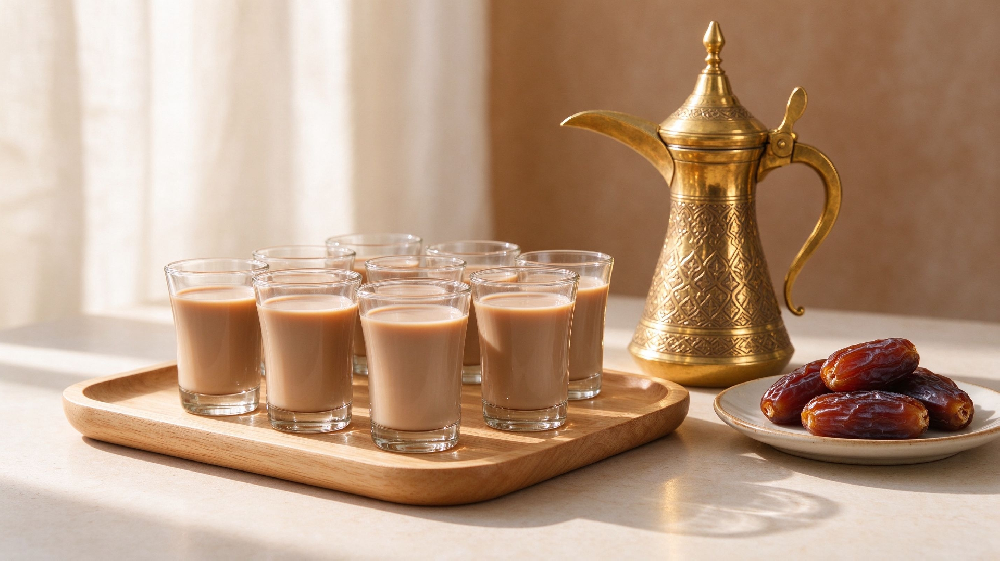
Powdered Ingredients for Vending Machines and Office Coffee Service

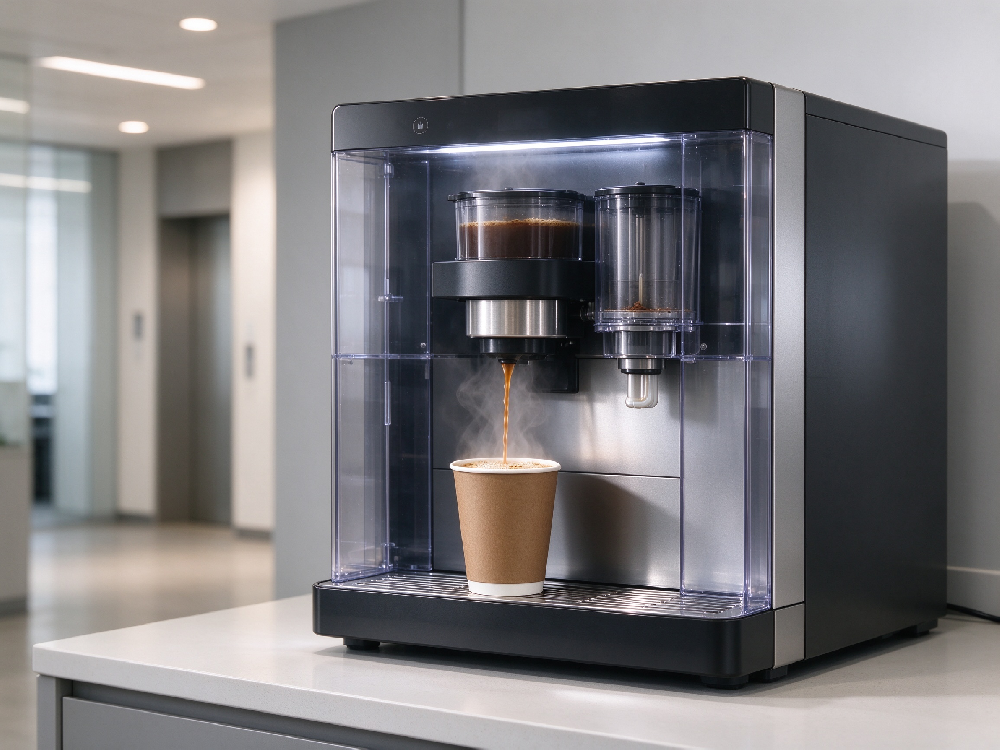
A vending machine is a small factory with no operator. It measures powder, drops it into a cup, adds hot water, mixes, and does it again two minutes later — hundreds of times a week, with nobody checking the result. That makes it one of the most demanding applications a powdered ingredient can face.What the machine actually requiresThe constraints are mechanical before they are sensory. Powder has to flow freely out of a hopper and through a dosing auger without bridging or caking. It has to dissolve in hot water in a matter of seconds, inside a mixing bowl that offers far less agitation than a spoon. And it has to leave no residue that will build up and eventually block the whipper or the outlet.Three properties matter most. Flowability, so dosing stays accurate from the first cup of the day to the five-hundredth. Low dusting, because fine dust coats the inside of the machine and attracts moisture. And fast wetting, because a clump that forms in the mixing bowl never gets a second chance.Where creamer and coffee powder fitIn a typical hot beverage vending mix, instant coffee powder delivers the coffee note, non-dairy creamer delivers body and mouthfeel, and sugar or a sweetener system carries the volume. Whipping cream powder appears in machines that offer cappuccino-style drinks, where a light foamy top is part of the product promise.Each component has a different failure mode. Coffee powder that is too fine tends to dust and to clump when wetted. Creamer with poor flow behaviour bridges in the hopper during humid weather. Sugar with uneven particle size segregates in the mix, so the first cups are sweeter than the last.Office coffee service is a different customerOCS — the capsules, sachets and bulk packs used in offices, hospitals and factories — buys on different criteria from vending operators. Volumes are smaller per site but the number of sites is large, so pack consistency and shelf life across a long distribution chain matter more than machine compatibility.Here the powder often competes with fresh milk on taste, not just on cost. That pushes formulators toward creamers with a clean dairy-like profile and low aftertaste, and toward mixes that stay stable when the water temperature in an office machine fluctuates.Practical notes for buyersAsk for samples and test them the way the machine will use them, not the way a lab does. Run a full hopper through a dosing cycle and watch for bridging. Mix at the machine's water ratio and check for lumps at the bottom of the cup. Leave an open pack in a humid room for a week and see whether it still flows.Also confirm the packing format early. Vending and OCS customers usually need smaller unit packs and tighter moisture barrier than industrial buyers, and changing packaging late in a project is where timelines slip.Jiangsu Leiva Biotech Co., Ltd supplies spray-dried non-dairy creamer, whipping cream powder and instant coffee powder from its own factory, with powder structure and flow behaviour adjusted for vending and OCS applications. Specific values are subject to the actual product specification sheet.website:www.hengfood.com
2026-10-22
View details