NEWS

Private Label Powdered Beverages: Why Retailers Are Launching Their Own Coffee and Creamer Brands

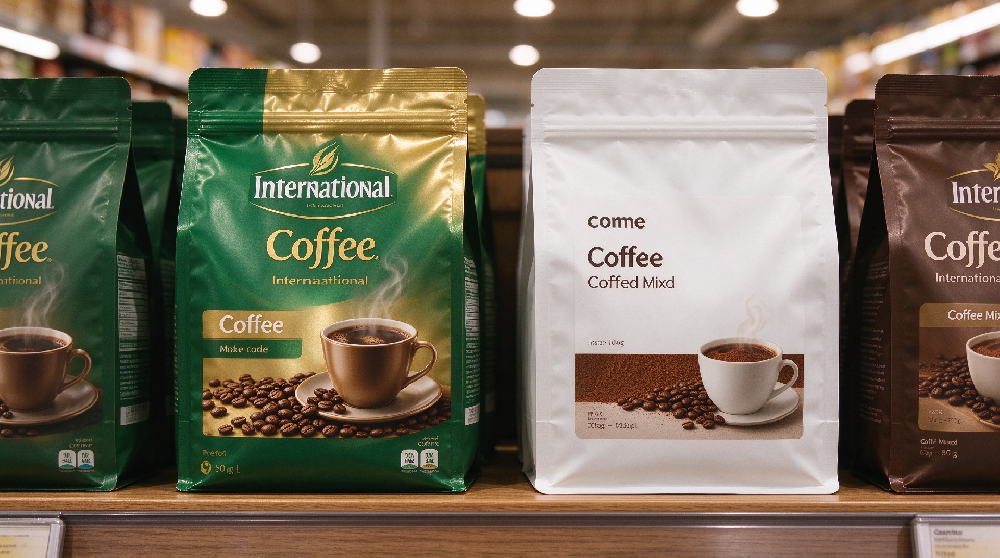
Walk into a supermarket in Jakarta, Dubai, Lagos or Lima and you will notice the same thing: next to the international coffee brands sits a store-brand version, often in a similar pack, at a noticeably lower price. Private label has moved from a marginal shelf to a strategic one — and powdered beverages are one of its fastest-moving categories.Why retailers are pushing own-brand powdersThe logic is straightforward. Coffee, creamer and instant drink mixes are high-frequency purchases with predictable demand, which makes them ideal for own-brand programmes: the retailer controls the margin instead of handing it to a brand owner, and it can build loyalty around price and pack size rather than advertising spend.There is also a supply-side reason. Spray-dried powders are among the easier food categories to localise. A retailer does not need a factory — it needs a partner that can supply a stable base powder, then adjust flavour, sweetness, colour and packaging for its own market. That is a much shorter path to a private label SKU than, say, chilled dairy or carbonated drinks.What this changes for ingredient suppliersFor powder manufacturers, private label shifts the conversation. Buyers are no longer only asking "what is your price per tonne". They are asking about batch-to-batch consistency, the ability to run several recipes on the same base, documentation for label declarations, and how quickly a new flavour variant can be sampled and shipped.Consistency matters more here than in branded products. A store brand has no marketing story to fall back on — if the second batch tastes different from the first, the customer simply switches back. Retailers therefore tend to test harder at the sample stage and to audit supply continuity before committing.Where the opportunity sitsThree segments stand out. First, instant coffee and coffee mixes, where own-brand penetration is already high in discount retail. Second, non-dairy creamer sold as a standalone household pack, especially in markets where dairy is expensive or ambient storage is the norm. Third, flavoured instant drink powders — chocolate, malt, tea-based and functional blends — where flavour rotation is frequent and pack sizes vary widely.The Middle East, Southeast Asia, Africa and Latin America are the most active regions for this shift, largely because modern retail is expanding faster than brand loyalty is forming. In those markets, a retailer that launches a credible own-brand coffee mix can win shelf space quickly.What buyers should look forAsk suppliers three questions. Can they hold a specification across shipments, not just across samples? Can they support several SKUs from one base powder without re-tooling? And can they provide the documentation a retailer's quality team will request during onboarding?Private label is not a cheaper version of branded business — it is a different business, with tighter tolerances and longer commitments. Suppliers who understand that difference are the ones retailers keep.Jiangsu Leiva Biotech Co., Ltd produces spray-dried non-dairy creamer, whipping cream powder and instant coffee powder in its own factory, and supports private-label programmes with base powders, formulation adjustment and sample development. Specific values such as fat content and solubility are subject to the actual product specification sheet.website: www.hengfood.com
2026-10-20
View details

Coconut-Based Creamers: Why Southeast Asia and the Middle East Are Driving the Next Wave

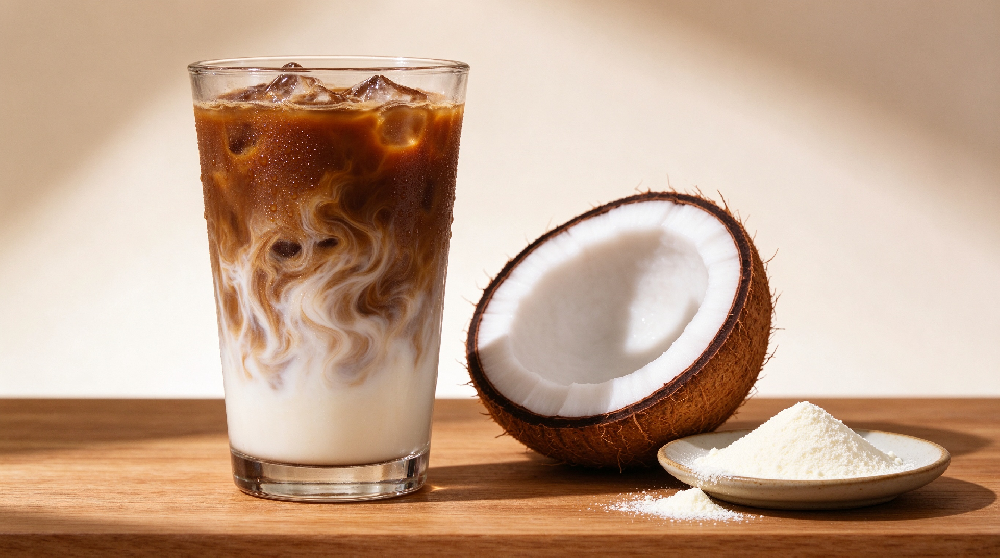
Coconut has been part of the regional diet for centuries — in curries, desserts, coffee and coconut milk drinks. What is new is the format: coconut creamers and coconut milk powders built for industrial use, designed to dissolve cleanly, blend with instant coffee and tea, and survive a long voyage at ambient temperature.Why coconut, and why now.Three forces are converging. First, dairy-free options keep gaining shelf space across Southeast Asia and the Middle East, both among lactose-intolerant consumers and among buyers who simply want a plant-based claim on the pack. Second, coconut delivers the mouthfeel that plant-based drinkers miss most: a naturally creamy, rounded body that does not taste thin or beany the way some other plant bases can. Third, coconut is not exotic in these markets — it is familiar, and familiarity sells.The Middle East angle.In the Gulf, coffee culture is deeply rooted: cardamom-spiced coffee, instant coffee with creamer in the office, and a fast-growing specialty café scene. A coconut-based creamer lets a brand carry a plant-based claim while keeping the sweet, creamy profile local consumers already expect. It works in 3-in-1 style mixes as well as in the premium end of the shelf.Southeast Asia: the volume story.Indonesia, Malaysia, Vietnam, Thailand and the Philippines are the core markets here. Coconut is a domestic crop, milk tea and coffee chains keep expanding, and manufacturers want both cost predictability and a plant-based story they can print on the pack. Coconut creamers suit instant coffee blends, milk tea powders and blended cold drinks.What formulators should watch. Coconut fat behaves differently from the vegetable fats used in conventional non-dairy creamers. It melts at a lower temperature, which is an advantage in cold drinks and a genuine challenge in hot drinks and in warm warehouse conditions. That makes the carrier system and the emulsifier package the deciding factors — not the coconut content on the label. Useful checks include: does the powder still flow after a few months in tropical storage; does it dissolve in both hot and cold water; does it leave an oily film on the surface of the drink; and does the coconut note stay clean, or turn soapy over time.A practical buyer's checklist.Ask the supplier four questions. What is the coconut fat source, and how stable is the supply? What carrier and emulsifier system is used, and why that one? Can the product be supplied as a finished creamer, or as a coconut milk powder to be blended in-house? And can the supplier run application trials in the customer's own recipe rather than only offering a generic sample?Jiangsu Leiva Biotech Co., Ltd. produces non-dairy creamer, whipping cream powder and instant coffee powder at its own spray-drying facility in Jiangsu, China, and supports buyers with application-specific samples and formulation advice. Final parameters such as fat content and solubility should be confirmed against the actual product data sheet.Website: www.hengfood.com
2026-10-14
View details

Creamer and Whipping Cream Powder in Confectionery: Candies, Coatings and Fillings

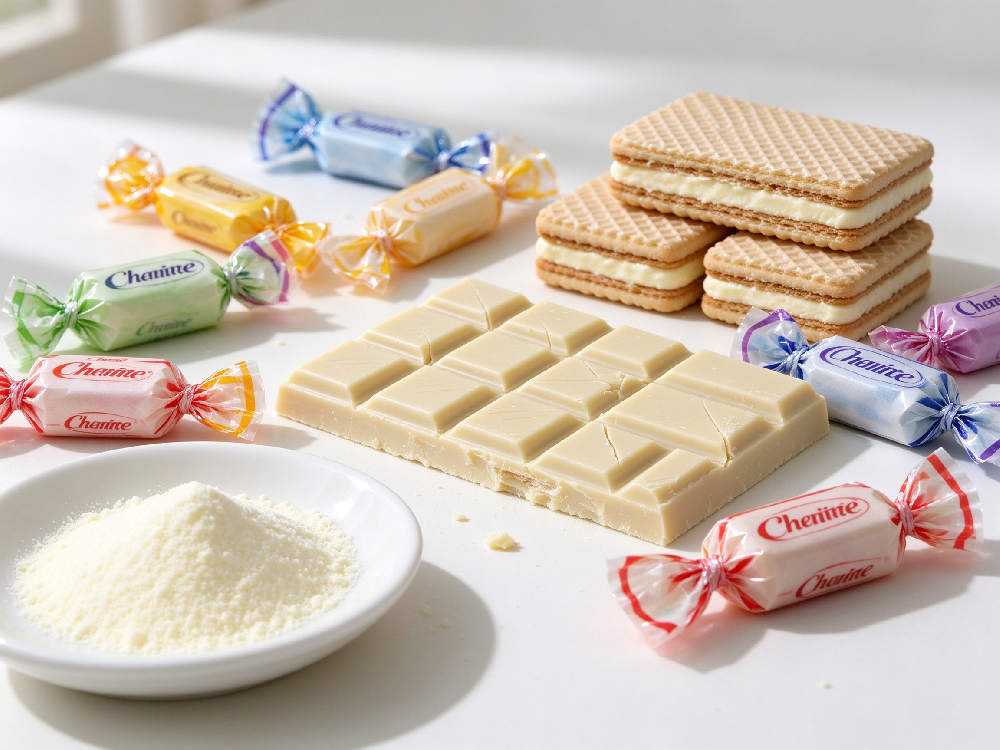
Confectionery is one of the quietest and most stable homes for powdered cream ingredients. While beverage applications get most of the attention, candies, coatings and fillings consume non-dairy creamer and whipping cream powder in steady volume — and for reasons that are technical, not cosmetic.Why powder works in candy.Confectionery is a hot, concentrated and often acidic environment. A dairy-based ingredient has to survive that: high cooking temperatures, low moisture, and a finished product that may sit on a shelf for a year. Non-dairy creamer performs well here because its fat is already emulsified and encapsulated, so it disperses evenly into a sugar mass instead of separating. It also delivers a consistent creamy body without adding dairy solids that can scorch or age badly under heat.Coatings and compound chocolate.In compound coatings and white compounds, creamer contributes creaminess and a clean dairy-style note at a controlled cost. Because the fat system is already stabilised, it blends predictably into the coating mass — which matters when a factory runs the same line day after day.Fillings, fudge and toffees.Cream-based fillings — think wafers, sandwich biscuits and filled chocolates — depend on both body and stability. Here creamer supplies the milky mouthfeel, while the filling's own fat and starch system holds its shape. In fudge and toffee, a small amount of creamer rounds off the sweetness and adds a cooked-cream note.Whipping cream powder in aerated confectionery.Where a product needs air and a light texture — marshmallow-style fillings, aerated nougat, whipped centres — whipping cream powder is the tool of choice. It hydrates and whips into a stable foam, letting manufacturers control overrun and texture without the cold-chain burden of liquid cream. That last point matters in tropical markets, where keeping liquid cream cold from factory to finished line is a real cost.Three practical points for confectionery developers.First, match the creamer's flavour profile to the candy base — a cooked, caramel-heavy base needs a cream note that can stand up to it. Second, watch water activity, because adding a powder changes the moisture balance of the whole system. Third, test on the real line: tempering, depositing and enrobing equipment behave differently from a laboratory bench.From coatings to whipped centres, the appeal of powdered cream ingredients in confectionery comes down to three things: they disperse cleanly in hot, concentrated systems, they remove the cold chain, and they deliver consistent creaminess batch after batch.Jiangsu Leiva Biotech Co., Ltd. manufactures non-dairy creamer, whipping cream powder and instant coffee powder at its own spray-drying facility in Jiangsu, China, and supports buyers with samples and application guidance. Recommended ratios and performance vary by application — please confirm against the actual product data sheet.Website: www.hengfood.com
2026-10-09
View details

Sugar Reduction and Clean Label: What Is Changing in Powdered Beverage Formulations?

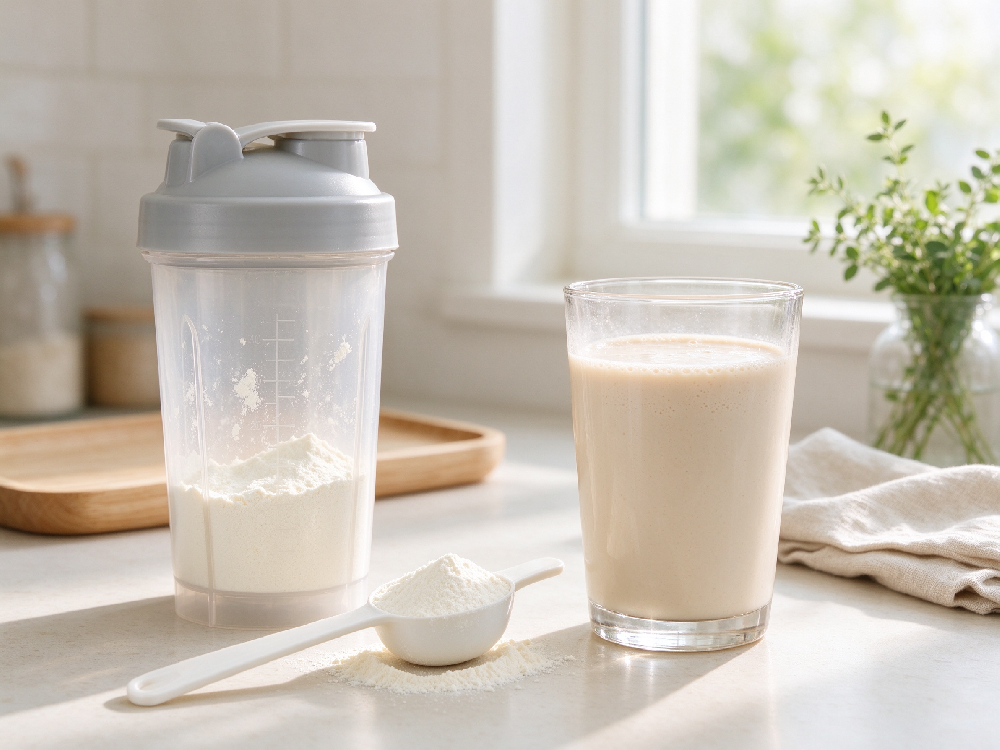
For decades the powdered beverage aisle was built on one promise: convenience at a low price. That promise still holds — but the brief has changed. Buyers across Southeast Asia, the Middle East, Africa and Latin America are now asking for less sugar, shorter ingredient lists and clearer sourcing, while keeping the taste their consumers already know. For manufacturers of spray-dried powders, this shift reaches into almost every corner of the formulation.Sugar is the first thing to move.Sugar has never only been about sweetness. In a powdered drink mix it also adds bulk, body, mouthfeel and a fast, clean dissolution profile. Cut it and the gaps show up quickly: the drink tastes thin, the powder dissolves unevenly, and the creamy note collapses. That is why sugar reduction rarely means simply removing sugar. It usually means rebalancing the whole system — high-intensity sweeteners to restore sweetness, plus maltodextrin, fibre or a creamer system to bring back the body that sugar used to provide.Clean label follows closely behind. Consumers read ingredient lists, and they prefer names they recognise. For suppliers this translates into pressure to simplify formulations: fewer additives, fewer synthetic emulsifiers, and a preference for dairy-free and plant-based carriers. In practice, that often means replacing lecithin or synthetic emulsifiers with functional alternatives such as natural clouding agents, and choosing creamer bases that already do more of the work with fewer inputs.Powder quality becomes harder, not easier.Paradoxically, a shorter and lighter formulation is more demanding to engineer. With less sugar and fewer stabilisers, solubility, anti-caking behaviour and creaminess can all degrade. The burden shifts to the carrier system and the drying process: how well the oil phase is emulsified, how evenly the particles are formed, and how stable the finished powder stays after months in a warm, humid warehouse. These are process questions, not marketing questions.What this means for buyers.When sourcing powders for a reformulation, it helps to ask three things. First, can the supplier offer a lower-sugar or no-sugar-added version of the same base, so the taste does not drift? Second, is there a plant-based option for markets where dairy or animal-derived inputs are a concern? Third, can they supply samples fast enough to run a real bench trial before a launch date is committed? A supplier who can answer all three is usually the one worth keeping.Website: www.hengfood.com
2026-09-30
View details